

What is the difference between a waterproof vanity cabinet and a bathroom cabinet?
Nov 02, 2026
If you’ve ever stared at the bathroom storage unit under your sink, wondering why some products are labeled “waterproof vanity cabinet” while others are just called “bathroom cabinet,” you’re not alone. For years, I’ve fielded this exact question from homeowners, interior designers, and even fellow suppliers at trade shows. Most people assume the terms are interchangeable—after all, both live in the bathroom, right? But after working as a Waterproof Vanity Cabinet supplier for over a decade, I’ve seen how this distinction is the difference between a unit that lasts 10 years and one that needs replacing in 2. Today, I’m breaking down the real, science-backed differences between these two products, no jargon included.
Let’s start with the basics. When a customer first walks into our showroom or checks our website, they often skim past the product categories, assuming a bathroom cabinet is a bathroom cabinet. It’s easy to see why: both hold toiletries, linens, bathroom cleaners, and sometimes small appliances. They’re both installed below or next to sinks, within a space that’s constantly exposed to moisture—steamy showers, splashing from handwashing, accidental water spills, even the occasional leak from a plumbing pipe under the sink. So why the separate naming? The answer comes down to material science, design intent, and performance standards that aren’t part of every bathroom cabinet on the market.
First, let’s talk about what makes a true waterproof vanity cabinet different. I’ll never forget the time a client brought in their newly installed bathroom cabinet, swollen at the seams after just three months of use. They’d bought it from a big-box store, lured by a low price, and the label said “water-resistant”—a phrase that’s easy to misinterpret. When we took a look, the particleboard core had absorbed water through the edges of the cabinet, where the veneer coating didn’t extend. That’s the key: water resistance and waterproofing are not the same thing. A waterproof vanity cabinet isn’t just coated to repel small spills; it’s engineered to withstand prolonged, direct exposure to water without degradation.
The core material here is non-negotiable. Most standard bathroom cabinets use particleboard or MDF (medium-density fiberboard) as their base. These materials are cheap and easy to shape, but they’re like sponges when they get wet—they swell, warp, and grow mold almost instantly. A waterproof vanity cabinet, on the other hand, uses marine-grade plywood, solid teak, or high-density PVC (polyvinyl chloride) as its core. These materials are inherently water-resistant: marine-grade plywood has multiple layers of wood glued with waterproof adhesive, teak has natural oils that repel moisture, and PVC is a synthetic that never absorbs water at all. Even the hardware on a waterproof vanity cabinet is different—standard brass hinges will corrode when exposed to steam over time, so we use stainless steel or zinc-plated hardware that won’t rust.
Then there’s the design of the waterproof vanity cabinet. Every seam, edge, and joint is sealed with a waterproof caulk or sealant, not just glued. Unlike a basic bathroom cabinet, which might leave small gaps around edges for air circulation, a waterproof vanity cabinet is built to create a barrier against water intrusion. The surfaces—whether it’s a painted exterior, a laminate, or solid wood veneer—are coated with a UV-stabilized, waterproof finish that doesn’t peel or chip when exposed to high humidity. I’ll admit, it’s a lot more work to manufacture this way, which is why waterproof options often cost more upfront. But when you consider that a cheap bathroom cabinet will need replacement in under five years (and that labor to replace it costs more than the cabinet itself), that upfront investment is worth it.
Now, let’s shift to the other side: what’s a bathroom cabinet, and why is it different? For the sake of this conversation, I’m talking about standard, non-waterproof units that are designed for bathrooms, not specifically built to handle prolonged water exposure. Most of the bathroom cabinets sold at big-box retailers, online marketplaces, and even some interior design showrooms fall into this category. They’re made to hold items that might get splashed occasionally, but not to sit in a space that’s consistently damp. That’s not a knock on these units—they’re perfect for some bathrooms! If you have a powder room that never has a shower, or if you’re renovating a guest bathroom that only gets used a few times a month, a standard bathroom cabinet works great. It’s cheaper, easier to install, and comes in hundreds of style options to match any decor.
But here’s the catch: a standard bathroom cabinet can only handle incidental moisture. If you put it in a primary bathroom with a daily shower, or if there’s even a small leak under the sink (something most homeowners don’t notice until it’s too late), that cabinet will start to fail. The particleboard core will swell, the doors will get misaligned, and mold will grow in the hidden gaps—all of which are not just unsightly, but can be bad for your indoor air quality. I’ve had customers tell me they “treated” their bathroom cabinet with a waterproof spray to fix this, but that’s a temporary fix at best. Spray sealant wears off after a year or two, and it never penetrates the core of the material like a true waterproof vanity cabinet does.
Let’s test this with a real-world example from our business. Last year, we had a customer named Sarah who was renovating her master bathroom. She initially reached for a standard bathroom cabinet because it was $200 cheaper than our waterproof vanity cabinet. Halfway through the renovation, her plumber pointed out that she had a small leak in the supply line under her sink—nothing major, but enough to drip water onto the cabinet every day for three weeks before it was fixed. By the time Sarah called us in for a second opinion, her standard cabinet’s base was swollen 2 inches, and the doors wouldn’t close. She ended up switching to our waterproof vanity cabinet, and a year later, she sent us a photo of it still looking like new. That’s the kind of story that sticks with me—it’s proof that the difference between these two products isn’t just marketing hype.
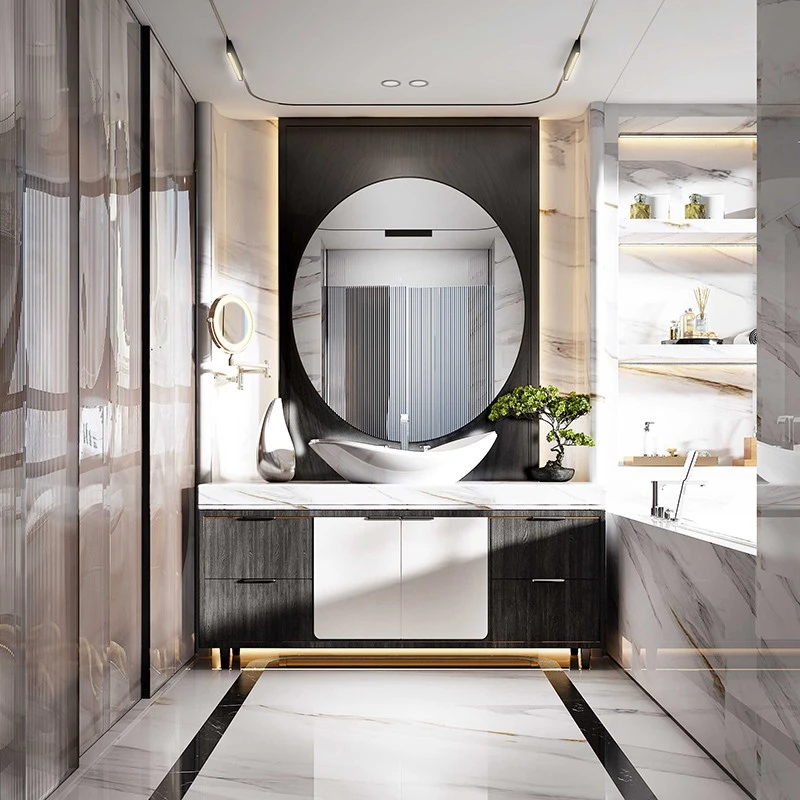
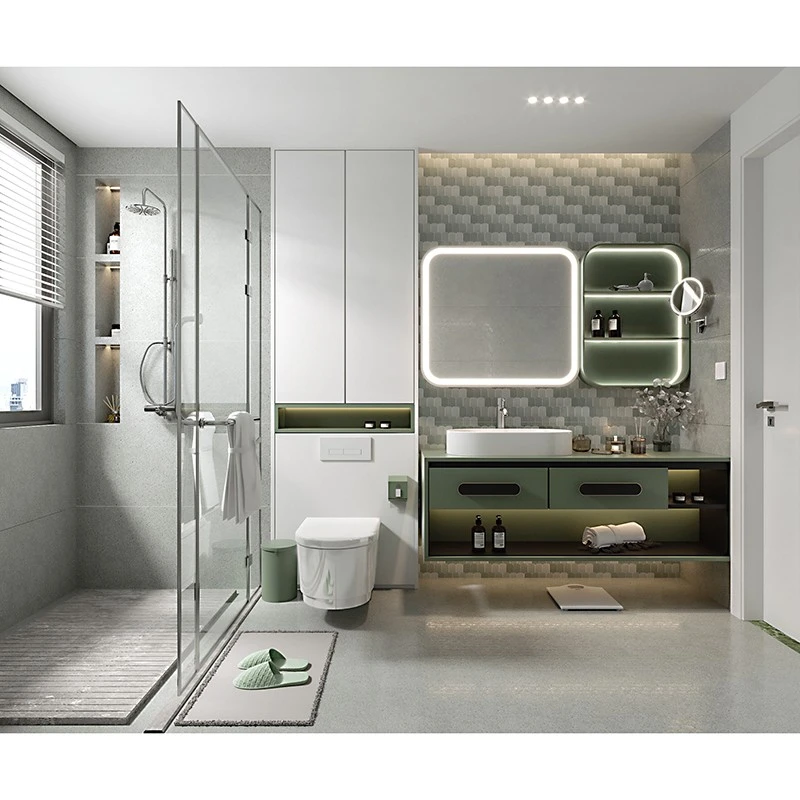
Another key difference is customization options, which is something many homeowners overlook. A waterproof vanity cabinet isn’t just for basic sinks—it can be tailored to fit your exact bathroom space, from narrow corner units to double-sink installations. We also offer integrated features that standard bathroom cabinets don’t, like the Bluetooth mirror cabinet, which combines storage with a waterproof mirror that connects to your phone for music or hands-free calls. These features are only possible with a durable, waterproof base material that can handle the integration of electronic components without corroding. For homeowners who want more than just storage—like built-in lighting, USB chargers, or even heated towel bars—a waterproof vanity cabinet is the only option that will support these features long-term.
Wait, let’s get back to the confusion point. I often get asked: can a standard bathroom cabinet be “made waterproof”? The short answer is no, not effectively. Even if you line the inside with a plastic sheet, the edges and seams will still be exposed to moisture over time, and the core material is still vulnerable to warping. A waterproof vanity cabinet is engineered from the inside out to be water-resistant, whereas a standard bathroom cabinet is designed to avoid direct water exposure. That’s why the categorization matters so much—if you’re building a bathroom that will see daily use, you need to think about more than just the price tag.
Let’s also talk about durability, which is where the science really comes in. We test every waterproof vanity cabinet we sell in our facility by simulating years of moisture exposure: we spray the cabinets with water 24/7 for 90 days, then check for swelling, warping, or mold growth. None of our products pass if they fail this test. For standard bathroom cabinets, the manufacturers only test for occasional splashes, not prolonged exposure. So when you compare the lifespan, a waterproof vanity cabinet lasts an average of 15 years, while a standard bathroom cabinet lasts 5 to 7 years. That means over 15 years, you’d replace two standard cabinets for a total of $600 to $800, compared to one waterproof vanity cabinet for $500 to $700. Over time, the waterproof option is actually more affordable.
I’d be remiss if I didn’t mention vanity cabinets without tops, another product that often gets grouped in with these two. If you’re doing a custom sink installation or you already have a countertop you love, a vanity cabinets without tops is a great option—it’s just the base cabinet, no sink or countertop included. This is different from both waterproof vanity cabinets and standard bathroom cabinets, because it’s a customizable base that you pair with your own surface. The same material rules apply, though: if you’re pairing it with a sink, you’ll want a vanity cabinet that’s waterproof to handle the constant water exposure from the faucet and sink.
So, how do you decide which one is right for your bathroom? Let’s break it down into simple questions:
- Is this bathroom a primary, daily-use space, or a rarely used powder room/guest bath?
- Will the cabinet be installed below a sink, where it could be exposed to splashes or leaks?
- Do you want the cabinet to last as long as your bathroom’s flooring and fixtures (10+ years)?
- Are you looking to add integrated features like a Bluetooth mirror cabinet or USB chargers?
If you answered yes to most of these, a waterproof vanity cabinet is the right choice. If it’s a small, low-use powder room and you’re on a tight budget, a standard bathroom cabinet will work just fine. But here’s the thing: no one plans for a plumbing leak, or a steamy shower that makes every surface damp. Investing in a waterproof vanity cabinet isn’t just about avoiding hassle—it’s about protecting your home, your health, and your wallet in the long run.
As someone who’s spent years helping customers choose the right bathroom storage, I’ve learned that the best products aren’t always the cheapest. They’re the ones that fit your needs and are built to last. If you’re ready to explore waterproof options, or if you have questions about custom sizes or features like integrated storage, I’m here to help. Whether you’re looking for a sleek modern design, a traditional style, or something in between, we have a range of waterproof vanity cabinet options to match any bathroom. We also offer vanity cabinets without tops for custom installations, and Bluetooth mirror cabinets to add extra functionality to your space.
If you’re ready to learn more or start planning your next bathroom project, feel free to reach out to our team to discuss your needs, browse our product lines, or request a quote. We’re here to help you make the right choice for your home, no matter the size or style of your bathroom.
References:
- National Kitchen & Bath Association. (2022). Kitchen and Bath Design Standards: Moisture Resistance in Bathroom Storage Units.
- American Wood Council. (2021). Performance of Engineered Wood Products in High-Humidity Environments.
- International Residential Code (IRC). (2023). Section R308: Plumbing and Bathroom Fixture Requirements.
- Tile Council of North America. (2022). Best Practices for Bathroom Cabinet Installation and Moisture Protection.
- Bathroom Industry Manufacturers Association. (2023). 2023 Bathroom Storage Product Performance Report.